

Views: 0 Author: Site Editor Publish Time: 2026-10-05 Origin: Site


Modern automotive LEDs deliver incredible brightness. Yet, they generate intense heat within remarkably tight spaces. Historically, standard Metal Core Printed Circuit Boards, commonly referred to as MCPCBs, were the go-to solution. Today, they struggle to manage this escalating thermal load. When an LED module overheats, its lifespan plummets. The light output degrades rapidly, ultimately compromising driver safety. As automotive lighting demands push past the physical limits of traditional materials, advanced engineering solutions have become an absolute necessity.
In this comprehensive guide, we explore the exact technical and performance reasons why inorganic substrates are replacing standard aluminum boards in high-end vehicle lighting. We will also detail how these advanced materials can future-proof your next headlamp design.
Elimination of the Thermal Bottleneck: Unlike standard metal core boards, ceramic circuit boards do not require an organic dielectric layer. This structural difference allows for direct and vastly superior heat transfer from the LED chip directly to the heatsink.
Exceptional Thermal Conductivity: Ceramic substrates like Aluminum Nitride and Alumina offer thermal conductivity rates ranging from 24 W/m·K to over 170 W/m·K. They significantly outperform standard aluminum boards that typically hover around 1 to 3 W/m·K.
Perfect Thermal Expansion Matching: Ceramic boards possess a Coefficient of Thermal Expansion that closely matches semiconductor LED chips. This physical alignment prevents solder joint cracking under extreme automotive temperature fluctuations.
Enhanced Lifespan and Miniaturization: Superior heat dissipation capabilities allow automotive engineers to design smaller, brighter, and longer-lasting headlight modules without compromising vehicle aerodynamics.
The automotive lighting sector has experienced a radical transformation over the past two decades. Vehicle manufacturers transitioned from halogen and High-Intensity Discharge bulbs to solid-state LED technology. Consequently, the fundamental architecture of the underlying circuit boards had to adapt to entirely new thermal realities.
During the early stages of LED implementation, standard fiberglass-reinforced epoxy boards were utilized for low-power indicator lights. However, this material possesses a dismal thermal conductivity of approximately 0.25 W/m·K. When high-power LEDs were introduced for forward illumination, standard fiberglass proved entirely inadequate. This led to rapid thermal degradation of the diodes. To solve this, the industry adopted the metal core printed circuit board, typically utilizing an aluminum or copper base. These boards became the standard because the metal core acted as a rudimentary heat sink. It pulled thermal energy away from the surface-mounted LEDs much faster than fiberglass ever could.
Looking at recent industry developments, the global regulatory acceptance of Adaptive Driving Beam systems has fundamentally altered headlamp engineering. Automakers are now racing to integrate high-resolution micro-LED matrix systems. This aggressive shift toward miniaturization and extreme power density means thermal management is no longer just a component consideration. It is the defining bottleneck of modern vehicle architecture. Standard aluminum boards simply cannot keep pace with the concentrated heat generated by hundreds of micro-LEDs packed into a few square millimeters. Therefore, transitioning to advanced inorganic substrates is the only viable path to support next-generation pixelated headlights.
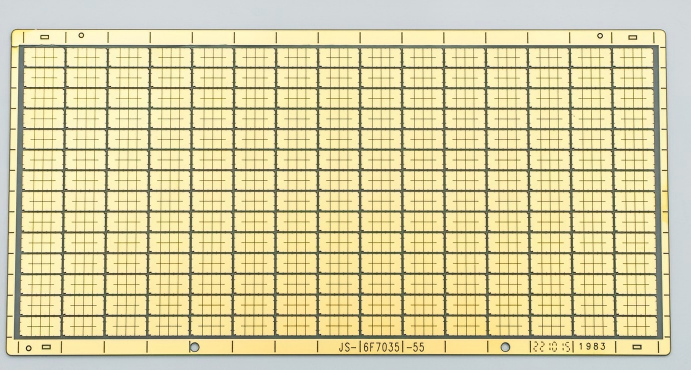
To understand why advanced materials are the superior successor, we must examine their fundamental composition. A Ceramic Circuit Board for LED Automotive Headlight is a highly specialized substrate where the foundational base material is composed of inorganic technical ceramics rather than metal alloys or fiberglass resins.
In a standard metal core board, a thermally conductive but electrically insulating layer, known as the dielectric, must be placed between the copper circuitry and the metal base to prevent short circuits. Ceramic substrates fundamentally disrupt this architecture. Because technical ceramic is naturally an excellent electrical insulator, it completely eliminates the need for an organic dielectric layer. Consequently, the copper circuitry can be bonded directly to the ceramic base. This creates an uninterrupted thermal highway from the LED junction straight to the cooling mechanism.
Not all ceramics are identical. In automotive lighting applications, engineers typically specify one of two primary inorganic compounds based on the thermal requirements of the headlight module.
Alumina, or Aluminum Oxide: This is the most common and cost-effective ceramic substrate. It offers excellent mechanical strength, robust electrical insulation, and a thermal conductivity of approximately 24 to 30 W/m·K. It is widely used for standard daytime running lights and primary low-beam LED arrays.
Aluminum Nitride: For extreme high-power applications, this is the premium engineering choice. It boasts a massive thermal conductivity ranging from 170 to 230 W/m·K. While more expensive to manufacture, Aluminum Nitride is indispensable for ultra-dense Matrix LED systems and laser-phosphor automotive lighting where instantaneous heat dissipation is non-negotiable.
To truly appreciate the value of inorganic substrates, one must critically evaluate the structural flaws inherent in traditional metal core boards when subjected to high-wattage automotive applications.
The anatomy of a standard metal core board consists of three layers: the metal base, an epoxy-based dielectric insulation layer, and the top copper foil for electrical routing. The critical flaw lies directly within the dielectric layer. While manufacturers often dope this epoxy with thermally conductive particles to improve heat transfer, it remains an organic polymer. Its thermal conductivity rarely exceeds 3 W/m·K. In high-power LED headlights, this layer acts as a severe thermal bottleneck. Heat generated by the LED travels quickly through the copper, hits the dielectric layer, and slows down drastically. This dynamic causes heat to pool directly beneath the delicate LED junction.
Imagine a vehicle navigating a freezing mountain pass at minus 40 degrees Celsius. The moment the high beams are activated, the internal LED junction temperature spikes to over 120 degrees Celsius in mere seconds. The environment within an automotive headlight housing is brutal. It subjects components to extreme external weather conditions, ambient engine bay heat, and constant mechanical vibration.
Under this continuous thermal cycling, the organic dielectric layer in a standard board is highly prone to thermal fatigue. Over time, the differing expansion rates between the copper, the epoxy, and the aluminum can cause micro-delamination. Once the dielectric layer separates even microscopically from the metal core, thermal transfer drops to near zero. This inevitably leads to catastrophic failure of the LED headlamp.
When evaluating substrates for automotive lighting, empirical data clearly illustrates the performance gap between traditional metal cores and technical ceramics. Partnering with a specialized manufacturer to source high-performance Planar LED Ceramic Substrates is often the most effective way to bridge this gap.
| Performance Metric | Standard Aluminum Board | Ceramic Board |
|---|---|---|
| Base Material | Aluminum Alloy | Inorganic Ceramic |
| Thermal Conductivity | 1 to 5 W/m·K, limited by dielectric | 24 to 230 W/m·K, direct transfer |
| Dielectric Layer | Required Organic Epoxy | Not Required, Naturally Insulating |
| Thermal Expansion Rate | Approx 22 ppm per degree Celsius | 4.5 to 7.5 ppm per degree Celsius |
| High-Temp Durability | Prone to delamination above 130 degrees Celsius | Stable at extreme temperatures above 300 degrees Celsius |
The most glaring difference between the two technologies is thermal efficiency. Even the highest-grade standard aluminum boards struggle to surpass 5 W/m·K due to the organic insulation layer. In stark contrast, an Alumina ceramic board starts at 24 W/m·K, making it nearly five times more efficient. Furthermore, Aluminum Nitride variants can exceed 170 W/m·K. This allows ceramic boards to dissipate heat instantly, maintaining significantly lower LED junction temperatures.
The Coefficient of Thermal Expansion measures how much a material expands when heated. Semiconductor LED chips have an expansion rate of roughly 3 to 7 ppm per degree Celsius. Aluminum expands at a much faster rate, around 22 ppm per degree Celsius. When a headlight turns on and heats up, an aluminum board expands significantly more than the LED chip attached to it. This structural mismatch places severe mechanical shear stress on the solder joints. Over time, this stress causes micro-cracks, leading to flickering or total failure. Specifically, ceramic substrates naturally possess an expansion rate of 4.5 to 7.5 ppm per degree Celsius. They expand at the exact same rate as the LED, thereby preserving solder joint integrity.
The transition from traditional metal-core printed circuit boards to advanced inorganic materials is not merely a passing trend. It is an engineering necessity driven by the laws of thermodynamics. Implementing these substrates offers several measurable, empirical advantages that directly impact the performance and longevity of the vehicle lighting modules.
In solid-state lighting, the relationship between operating temperature and light output is strictly inversely proportional. The critical metric here is the junction temperature, which is the highest operating temperature of the actual semiconductor in the LED chip. When this temperature rises beyond the manufacturer specified thresholds, the LED experiences accelerated degradation of both the semiconductor die and the phosphor coating used to produce white light. This degradation leads to lumen depreciation, where the headlight gradually dims over time.
Standard metal boards inherently trap a portion of this heat directly beneath the LED package. Over thousands of hours of operation, this thermal bottleneck accelerates dimming. Conversely, a ceramic board provides a direct, unhindered thermal pathway. By utilizing materials with zero organic barriers, the heat is rapidly wicked away from the junction. By integrating a high-quality Ceramic Circuit Board for LED Automotive Headlight Substrates, automotive manufacturers can confidently offer extended warranties. They know the headlights will maintain their factory-rated luminosity for the entire operational life of the vehicle.
Modern automotive design heavily prioritizes aerodynamics and aesthetic aggression, leading to increasingly narrow and compact headlamp housings. Simultaneously, the demand for advanced functionality requires packing dozens, sometimes hundreds, of individual LED chips into an incredibly small surface area. This high packaging density creates localized thermal hotspots that standard aluminum boards simply cannot mitigate. Lateral heat spreading in densely packed arrays causes thermal cross-talk, where the heat from one LED further elevates the temperature of adjacent diodes.
Ceramic substrates solve this spatial challenge through superior vertical thermal conductivity. Because the heat is pulled straight down through the inorganic substrate without lateral bottlenecking, engineers can place LED chips much closer together without risking thermal cascading. Consequently, automakers can design sleeker, more aerodynamic headlight modules that reduce vehicle drag coefficients while actually increasing total light output.
The front fascia of an automobile represents one of the most hostile environments for sensitive electronics. Automotive components must pass rigorous testing standards for discrete semiconductors and manufacturing quality. Under severe thermal cycling conditions, the matched expansion rate of ceramic materials virtually eliminates solder joint fatigue.
In addition, ceramics are entirely inorganic. This means they are impervious to moisture absorption, outgassing, and chemical corrosion from automotive fluids or road salts. This chemical and mechanical stability ensures that the lighting module remains robust and reliable, regardless of the environmental extremes the vehicle encounters.
Selecting the appropriate ceramic material for an automotive lighting project requires a careful analysis of the module power density, spatial constraints, and budget. While all ceramic boards offer significant upgrades over standard fiberglass and aluminum boards, the specific type of ceramic and the metallization process used will dictate the ultimate performance limit of the board.
Understanding the technical distinctions between the two primary substrates is critical for optimizing both performance and cost-efficiency.
Alumina: As the industry standard for the majority of ceramic board applications, Alumina offers a thermal conductivity ranging from 24 to 30 W/m·K. While lower than advanced ceramics, it is still approximately ten times more conductive than standard aluminum boards. It boasts excellent mechanical strength and a highly competitive manufacturing cost. This makes it the optimal choice for standard LED headlights, daytime running lights, and turn signals where thermal loads are moderate but reliability is paramount.
Aluminum Nitride: For cutting-edge automotive lighting, like ultra-high-power Matrix LEDs, laser-assisted high beams, and LiDAR integration, Aluminum Nitride is the premium engineering choice. It delivers extraordinary thermal conductivity, typically ranging from 170 to 230 W/m·K. It rivals the thermal properties of pure metallic aluminum, but without the need for a thermally resistive dielectric insulation layer. While the raw material costs are higher, it is indispensable for applications where extreme power density is packed into a microscopic footprint.
| Technical Parameter | Standard Aluminum Board | Alumina Ceramic | Aluminum Nitride |
|---|---|---|---|
| Thermal Conductivity | 1.0 to 5.0 W/m·K | 24 to 30 W/m·K | 170 to 230 W/m·K |
| Expansion Rate Match | Poor, approx 23.0 ppm per degree Celsius | Good, approx 7.0 ppm per degree Celsius | Perfect, approx 4.5 ppm per degree Celsius |
| Best Application | Low-power interior lights | Standard Headlights and Daytime Lights | Matrix, Laser and High-Density LEDs |
The base material is only one half of the equation. The method used to bond the copper circuit traces to the ceramic substrate is equally critical. Because ceramics are inorganic and chemically inert, traditional board etching methods are often insufficient. When sourcing a Planar LED Ceramic Substrate, engineers must critically evaluate the manufacturer metallization capabilities.
Direct Plated Copper: This technology involves using a vacuum sputtering process to deposit a thin film of titanium and copper onto the ceramic, followed by electroplating. Direct Plated Copper allows for incredibly fine trace widths and tight spacing. This makes it the ideal manufacturing method for high-density Matrix LED arrays where dozens of micro-LEDs must be individually addressed. It also ensures a perfectly flat surface, which is crucial for the accurate placement of surface-mount technology components.
Direct Bonded Copper: This process involves bonding heavy copper foil directly to the ceramic substrate using a high-temperature oxidation process. While Direct Bonded Copper cannot achieve the ultra-fine trace resolution of plated copper, it excels in current-carrying capacity. This makes it the preferred choice for ultra-high-current power distribution.
Standard metal core boards served the automotive lighting industry well for many years, acting as a vital stepping stone in the transition away from halogen bulbs. However, the future of high-power automotive lighting requires a fundamentally superior approach to thermal management.
Ceramic boards effectively eliminate the thermal bottleneck caused by organic dielectrics. By providing instantaneous heat dissipation and perfect thermal expansion matching for semiconductor chips, they solve the mechanical and thermal failures that plague traditional boards. For automakers and lighting engineers looking to push the boundaries of brightness, miniaturization, and reliability, upgrading to inorganic ceramic solutions is the definitive path forward. To ensure your next automotive lighting project meets the highest standards of thermal performance and reliability, explore the custom-engineered solutions at XRmkpcb and select the exact ceramic substrate tailored to your engineering requirements.
Initially, ceramic circuit boards carry a higher upfront manufacturing cost compared to standard aluminum-core boards. This is primarily due to complex metallization processes and the cost of raw inorganic materials. However, evaluating cost strictly on a per-board basis is misleading in automotive engineering. Because ceramic substrates drastically extend the lifespan of expensive LED chips, reduce warranty claims, and often eliminate the need for massive external aluminum heat sinks, the overall system cost is frequently lower. The Return on Investment is highly favorable when factoring in long-term reliability.
Automotive headlights operate in environments with extreme temperature fluctuations. A vehicle parked outside in winter may start at an ambient temperature of minus 40 degrees Celsius. Within minutes of operation, the LED junction temperature can soar to 125 degrees Celsius. As materials heat up, they expand. If the board substrate expands at a much faster rate than the semiconductor LED chip mounted on top of it, it creates severe mechanical shear stress. This stress physically tears at the solder joints, leading to micro-cracking and eventual electrical failure. Ceramic substrates possess an expansion rate that closely matches the LED chip, preventing this critical failure mode.
Yes, advanced manufacturing techniques allow for high degrees of customization. While ceramics are inherently brittle in their raw state, precision laser profiling and routing technologies enable manufacturers to cut ceramic substrates into highly customized planar shapes. This flexibility is essential for modern automotive engineering, where the board must fit precisely into aerodynamically swept, asymmetrical headlight housings.
While ceramic boards offer incredible thermal conductivity and eliminate the insulating bottleneck found in standard boards, ultra-high-power automotive LEDs generate an immense total volume of heat that must still be evacuated from the headlight housing. Therefore, a secondary heat sink is usually still required for high-beam and Matrix applications. However, the critical advantage is that the ceramic board ensures the heat travels from the LED die to that external heat sink almost instantaneously. This allows engineers to use significantly smaller and lighter secondary heat sinks than would otherwise be required.
Heat is the primary enemy of solid-state lighting. When thermal conductivity is low, heat pools at the semiconductor junction. This elevated temperature degrades the phosphor coating and the diode itself, leading to rapid lumen depreciation. High thermal conductivity substrates pull this heat away instantly, keeping the junction temperature well within safe operating limits and thereby maximizing the lifespan of the headlamp.
Yes. While raw technical ceramics are brittle, they are incredibly robust once bonded to copper circuitry and properly mounted within a headlamp housing. Their high mechanical strength, combined with immunity to thermal fatigue and moisture, makes them exceptionally durable against the continuous engine vibrations and rough road conditions experienced by vehicles.


